Drancy internment camp
Impure BloodDrancy internment camp is both a destination in the wartime transport of Jews from Nice and a point of departure in the investigation of Corinne Delage’s identity. Its records turn the past into evidence: they suggest that a child later raised by the Groismonts may have escaped a deportation train, and they identify the arrest of Adam Djourescu and his family as the work of a Gestapo unit acting on an unnamed informant’s tip.
Role in the Deportation Network
The camp appears within a transport system that carried Jews from Nice toward Drancy and onward to Auschwitz. Land Registry records place the Groismont farm beside the principal railway line running from Paris to the southeast, the same line used for transports from Nice to the holding camp at Drancy. This geography makes the railway more than background: it supplies a possible route between the mass deportations and Corinne’s otherwise unexplained arrival at the farm.
The investigation also consults a list of people eventually deported from the camp to Auschwitz. Reading the names alongside their ages, the investigators confront the presence of children among the detainees. The records therefore register more than movement between places: they point to families caught in a system that separated people from their homes and carried them toward further persecution.
Children and the Possibility of Escape
The account of the detainees’ choices gives the lists a human dimension. Parents could hand over their children to organizations that would care for them. Some distrusted the offer and kept their children; the account identifies that decision as tragic in retrospect. The investigators’ attention to ages and family entries reflects the stakes of such choices without claiming that every family had the same experience.
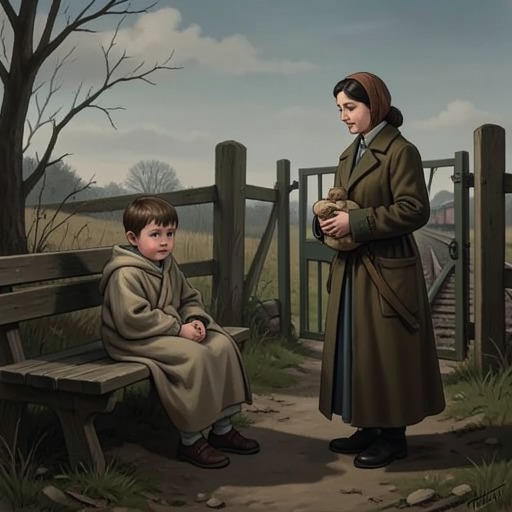
Against this history, Corinne’s arrival with the Groismonts takes on a new possible meaning. A letter from Madame Groismont, who was not Jewish, described the day the child entered their lives as her coming in like a lost little lamb. The phrasing seemed to suggest that Corinne had arrived alone rather than being brought from a car. The investigators’ theory was that the child had been aboard one of the trains bound for Drancy, and that her parents may have pushed her through a gap while the train slowed or stopped near the farm. They imagined that she then crossed the fields to the Groismont cottage, where she was welcomed and raised. This remains a reconstruction, not a confirmed account of how she escaped.
Records and the Djourescu Family
The lists also redirect suspicion in the investigation of Adam Djourescu’s arrest. The investigators had suspected that Vincent Dantier arrested Adam on an October day. A report instead established that a Gestapo unit arrested Adam and his family. The distinction matters: it rules out Vincent as the arresting officer, but does not end the inquiry into who made the arrest possible.
A list entry records a family of three arrested and deported on 10 October 1943, in the space of one working day. The investigators then learn that the Gestapo acted on a tip-off. The informant is not identified by name or initials; the report gives only an oblique reference to the number 287. Thus, the documentary record simultaneously corrects one assumption and opens a more consequential question about the source of the information.
Narrative Significance
Drancy’s significance lies in the way it joins personal identity to institutional records and railway geography. A farm beside a transport line, a family’s arrest, a list of deportees, and a letter about a child’s arrival become fragments from which the investigators attempt to recover what happened. The records can establish routes, dates, and the role of the Gestapo, but they leave the child’s escape and the informant’s identity unresolved. Drancy consequently anchors a narrative in which official documentation makes hidden histories legible without making them complete.